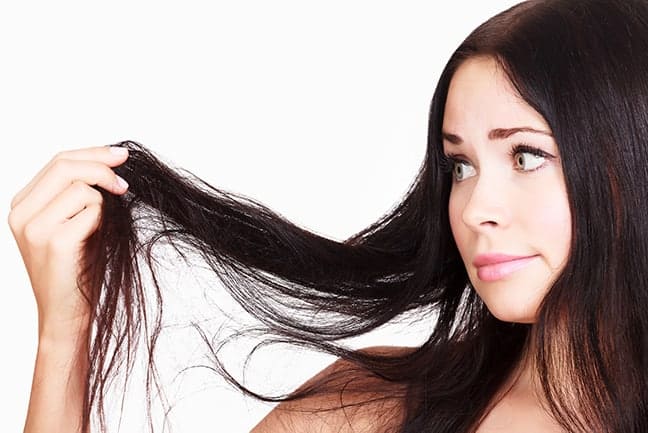
We all have days when we look in the mirror and just see oily, dirty hair. Maybe it’s at the end of a work day or maybe its on day 2 of “no wash” cycle. For some, that happens once in a while and it’s no big deal.
Why is my hair so oily all the sudden?
The amount of oil produced at your scalp is influenced by a lot of factors. Diet, environment, water temperature, etc. all change the sebum (oil) production in our bodies. If you have made recent changes that coincide with your new grease issue, you may want to consider if the changes might be the culprit.
Try reverting to your old routine for a couple of days if possible and test whether your scalp dries up some. If it’s not a change in routine, it could be poor nutrition. If you aren’t putting good stuff in your body it won’t give you good stuff in return.y
My hair gets greasy after one day. What can I do?
If your hair is super greasy the day after you wash it, you can make a few changes right away that will help. To start, turn down the water temperature!
We all love a long, hot shower but it’s best to save those for days when you can wear a shower cap and nix washing your hair. High water temperature will cause the sebum production in your scalp to go into overdrive. This will leave you with oily, gross looking hair even as early as mid day after you wash it. It can also cause excessive drying of your scalp, which turns up the grease even more!
1. Consider how you are washing your hair.
Working shampoo in to your roots gently (no scrubbing!) and then down your hair shaft cleanses your scalp and strands of oil, dirt, and product build up. Stick to putting conditioner on only the ends of your hair. You don’t want to add the fats and oils that make conditioner great to the top of your head.
2. Try blow drying your hair on the lowest heat setting.
Again, with temperature, the tools you use to style your hair have an impact on your oil producing glands. Let your hair air dry a few days a week. Wet braids will give you a cute look on day one and fun waves for day two. Try to keep as much heat as possible away from your head.
3. Keep your hands off your head.
The more you touch your hair, especially at your scalp, the more you’re going to move around the oil, dirt, and build up that’s hiding there. Brush it once or twice a day and call it good.
Why is my hair still greasy after I wash it?

Every day, at least one person in the world asks: “Why is my hair still oily after washing?”
And to that, we answer: “Oh, there are so many possible reasons.”
Abnormally greasy hair may be due to several factors like your hair care routine, the hair products you use, and the environment that you live in.
Worse, it may even be a symptom of an underlying medical condition.
Before assuming the worst, let us first look into the most probable reasons why your hair is extraordinarily oily, minus the possibility of a medical problem.
1. Over-conditioning
One common mistake that most of us make is to lather conditioner all over our scalp and hair.
It is totally unnecessary to apply conditioner to the scalp. Remember that our scalp already produces natural oils, which provide far better moisturization than chemical conditioners.
Lathering your scalp with a conditioner traps the natural oils in the scalp, making the hair appear greasy.
To avoid this, only apply conditioner from the mid-lengths to the tips of your hair because those parts need conditioning the most.
2. Improper rinsing
You might have washed and conditioned your hair but did not rinse it properly.
If this is the case, your hair will feel greasy after it dries because of the remnants of the conditioner.
To avoid this, use warm water in rinsing conditioner off your hair. Warm water opens up the cuticles in your hair and allows the hair to absorb the conditioner.
It is also important to scrub your scalp lightly using your fingertips and massage the lengths of your hair until it does not feel soapy anymore.
3. Using hot water
We advise you to rinse with warm water but not hot water. Using hot water on your hair strips off its natural moisture and leads to dehydration.
Just like any part of our skin, the scalp compensates for the dehydration by producing more oils which leads to that icky, greasy feeling.
4. Inappropriate conditioner
Maybe your hair feels greasy because you are using a conditioner that is too heavy for your hair.
If you have fine hair, do not use conditioners designed for those with thick and textured hair. If you have naturally oily hair, do not use conditioners made for those with dry hair.
Thick, textured, and dry hair require more intense moisturization. Such products are too heavy for thin and oily hair, resulting in a sticky and greasy feeling.
If you have thin and oily hair, opt for lightweight conditioners instead. Conditioner sprays are also a good alternative.
5. Dirty hair tools
Oil and dirt can also come from the things you often use on your hair, such as brushes and combs. Even hats and hair towels are not an exception.
The dirt and oil accumulated in these things will transfer to your newly washed hair every time you use them.
Bottom line: Make sure to use clean hair paraphernalia all the time.
6. Product build-up
Product build-up happens when you put too many hair care products on your hair.
When you apply one product after another and then let all of them sit on your hair throughout the day, your scalp and hair will probably feel heavy and greasy.
It is better to use only a few hair products on your hair. You may also schedule when to apply these products.
Some products will still have similar effects if you apply them thrice a week instead of daily.
To remove product build-up, use a clarifying shampoo once a week. Clarifying shampoos are designed to remove oil and residue on your scalp and hair cuticles.
7. Washing too often
Since you have oily hair and scalp, you might think it is better to wash your hair more often. But this is not the case.
Washing the hair too frequently, especially when accompanied by harsh shampoos, leads to dryness of the hair.
Overwashing is not healthy for both dry and oily scalp.
For those with dry scalps, frequent washing makes the scalp drier and results in flaky dandruff.
For those with oily scalp, frequent washing dehydrates the scalp and makes the scalp produce more oil than usual, resulting in heavy and oily hair.
What products are you using?
One easy way to get everyday oil under control is by using a clarifying shampoo a few times a month. These shampoos work extra hard to free built up oil, product, and general grime from your scalp and hair.
No matter how badly you want to stop the grease, do not over use these products. They strip everything from your hair and over using them can have the same effect as high temperature water. Your oil glands will panic thinking there’s some kind of dry-scalp emergency and you’ll be left with more stringy, sticky feeling locks than you ever thought possible. Below are 3 shampoos for greasy hair that will help you with fresher looking hair for days.
1. Scruples Hair Clarifier Shampoo


This shampoo gently removes build up of oil and gunk from the scalp down. It’s safe for daily use and doesn’t cause fading in color treated hair. It leaves your hair smelling and feeling clean and fresh. Scruples Hair Clarifier Shampoo is used in salons and often recommended by salon professionals.
It does an excellent job of cleaning at the scalp and adding volume. It’s great for people with high iron or chemical levels in their water, who live in high pollution areas, or who use a lot of styling products on a daily basis. You can find this product online or in salons.
2. Maple Holistics Degrease Shampoo


Maple Holistics Degrease Shampoo clarifies hair, removing dirt and oil build up from the scalp. This formula leaves hair looking less greasy even after 2-3 days after washing it. The shampoo is very effective, and it’s important to follow manufacturer directions on the bottle.
They recommend only a quarter sized amount of product, and that is plenty to clean hair and prevent dryness. It alleviates discomfort of issues from oil build up like itchiness and dandruff. This product is packed with natural, safe ingredients too. It’s an environmentally friendly choice with a great price.
3. Tree To Tub Organic Argan Shampoo for Oily Hair


This product works well for sensitive skin. Infused with Soapberry, this shampoo naturally balances the pH levels in the scalp to reduce oil and it’s related effects. The ingredients in this product promote strong, healthy hair from roots to ends. It does not cause dryness like some clarifying shampoos can. It leaves hair fuller looking and softer. It is safe for everyday use, but you may find that you can go at least one extra day without washing. It has a fresh peppermint smell that is not overpowering.
Try a dry shampoo.
Dry shampoos work by soaking up excess oil at your roots. If your hair is being flattened out by excess oil, dry shampoo is a fast, mess free way to give it some life back.
One pro tip is to make sure you don’t spray it directly on your roots. You don’t want to add build up there. Spray a few inches below your roots. Let the product sit for a few minutes so that it can absorb the oils in your hair, then massage it through. You can brush hair out or restyle after applying dry shampoo.
What about my diet?
There are diet changes you can make to lower the amount of oil your sebaceous glands are pumping out.
To start with, try making healthy carb and fat choices. “Empty” carbs and fats promote unbalanced hormones and can influence the amount of oil your body is producing. Exchange regular pasta for whole wheat products, try squash over white potatoes, and make fish a priority. By promoting a healthy hormonal system you will naturally make a difference in the look and feel of your hair.
You should try to reduce the amount of fried food you eat, too. These foods are soaked in oils that can leak in to your hair shaft from your body. You make enough natural grease on your own, you should try to add as little as possible to stay balanced.
Does drinking water help?
Drinking the right amount of water per day can help dry out your extra greasy strands. Water hydrates your internal organs, tissues, and your skin. Aiming for 64-80 ounces of water per day will give you best results.
By keeping your skin properly hydrated, you’ll be helping your brain send signals to your sebaceous glands that your skin is all set with oil. They’ll calm down and you can go an extra day without washing your hair. An easy way to make sure you hit the mark in ounces of water is to have a “go to” water bottle that you know the volume of. You’ll know you need to refill it 2 or 3 times each day to ensure you are getting the right amount of water.
How about my environment?
Working conditions, air pollution, the quality of air in your home, and other environmental factors can all play a role in excessively oily hair. If you have recently moved to a congested city and notice your hair is all the sudden extra greasy, pollutants in the air might be building up on your scalp and causing problems. If your work requires you to be active throughout the day, you might notice you need to wash your hair more often.
Take into consideration where you live and where you spend your time. You probably won’t move or quit your job because you have to wash your hair more often, but accounting for these factors will help you on the road to finding healthy balance for your hair.
There are a lot of things in and out of your control that influence the health of your hair. Make changes where you can, and give your hair extra care in areas that you can’t change.
Once you’ve made changes to your hair maintenance routine, your diet, and are more careful with your hair outdoors, you should notice some major changes. If you still have more oil in your scalp than you think you should, it may be time to talk with your doctor. There could be an underlying medical issue that your physician can help you treat or prevent. It’s better to be safe than sorry when dealing with any abnormal condition related to your body.
PIN For Later
Image Credits: Deposit Photos
How to prevent greasy hair after washing

So, what is the long-term solution for greasy hair?
Aside from avoiding improper hair care habits mentioned earlier, you can also do a couple of things at home.
Apple Cider Vinegar
In a spray bottle, combine five parts of water with one part of ACV. Spray it on your scalp and massage the roots.
Rinse after five minutes. This helps make your hair look shiny and healthy while controlling sebum production.
Green tea
Prepare green tea as usual. Let it cool.
Massage the green tea on your scalp and leave for 15 minutes before rinsing. This helps strengthen your hair while removing oil.
Baking Soda
Mix baking soda with shampoo or water and apply to the scalp. Rinse immediately. This helps clean residue out of your hair.
All these home treatments effectively get rid of excess oil in your scalp for the long term. Do at least one of these not more than thrice a week.
CHECK OUT: 7 Ways How to Make Your Hair Less Greasy Without Washing It
When to see a doctor
As mentioned earlier, an excessively oily scalp may signify an underlying medical condition.
It is important to consult a dermatologist if you notice that your scalp is oily and has scaly patches that burn or itch. This condition is called seborrheic dermatitis. Although this is common, it is better to consult a doctor to get it properly treated.
If seborrhea is not improving with home treatments, visit a doctor to check if you have further issues such as problems in your diet or hormone imbalance.