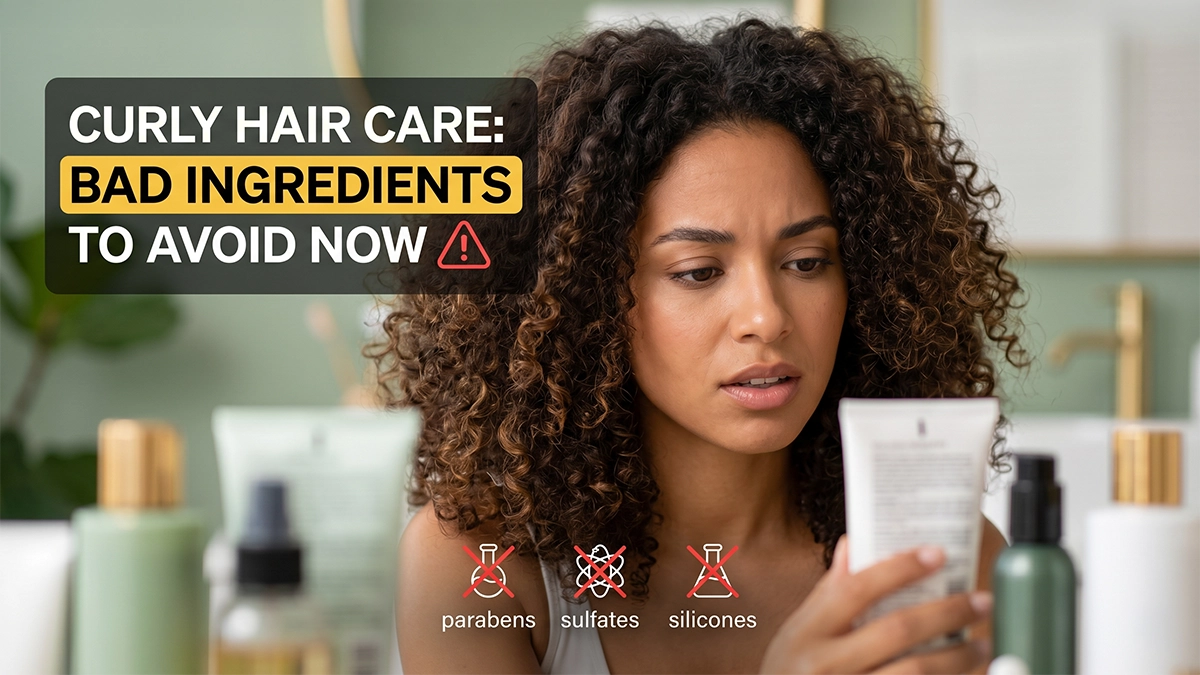
Curly hair is naturally drier than straight hair, because the oils from your scalp have a harder time traveling down each curl. That makes curls extra sensitive to harsh ingredients. Knowing the ingredients to avoid for curly hair is the quickest way to cut down on frizz, dryness and breakage.
Ingredients to Avoid for Curly Hair: The Top Offenders
1. Harsh Sulfates
Sulfates are strong cleansing agents that make shampoo lather. They’re great at removing oil, but on curly hair they often remove too much.
- Chemical Red Flags: Sodium Lauryl Sulfate (SLS), Sodium Laureth Sulfate (SLES), Ammonium Lauryl Sulfate (ALS), and Sodium C14-16 Olefin Sulfonate.
- The impact on curls: Sulfates strip away the natural oils that protect your strands, which can leave curls dry, frizzy and more prone to split ends.
2. Non-Water-Soluble Silicones
Manufacturers add silicones to styling formulas, curl cream, and conditioners to create a synthetic layer of shine and slip.
- Chemical Red Flags: Dimethicone, Cyclomethicone, Cyclopentasiloxane, Amodimethicone, and Cetearyl Methicone.
- The impact on curls: These silicones coat the hair and don’t rinse out with gentle, sulfate-free shampoo. Your hair may look sleek at first, but over time the build-up weighs curls down and keeps moisture from getting in.
3. Short-Chain Drying Alcohols
Not all alcohols are bad for hair. Fatty alcohols (like cetyl, stearyl and cetearyl alcohol) are moisturizing and add slip. Short-chain alcohols are the ones to watch out for.
- Chemical Red Flags: Isopropyl Alcohol, Alcohol Denat., Ethanol, Propanol, and Propyl Alcohol.
- The impact on curls: These alcohols are added to sprays and dry shampoos because they evaporate fast. Unfortunately, they also dry out your hair, which leads to frizz and breakage.
4. Mineral Oils and Heavy Petrolatum
These heavy ingredients show up in some pomades, greases and thick moisturizing creams.
- Chemical Red Flags: Petrolatum, Paraffinum Liquidum, Mineral Oil, and Petroleum Jelly.
- The impact on curls: Like non-water-soluble silicones, mineral oil and petrolatum sit on top of the hair and are hard to wash out without a sulfate shampoo, which starts the drying cycle all over again.
5. Parabens and Formaldehyde Releasers
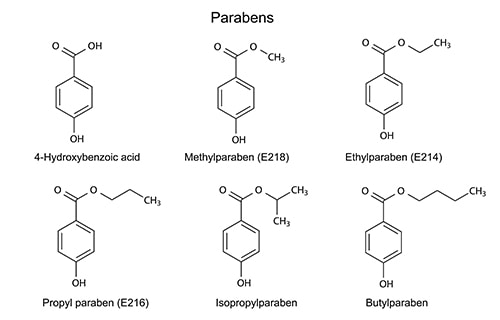
These preservatives keep products from growing bacteria and mold.
- Chemical Red Flags: Methylparaben, Propylparaben, Butylparaben, DMDM Hydantoin, Quaternium-15, and Imidazolidinyl Urea.
- The impact on curls: They don’t damage the curl itself, but some people with sensitive skin react to them with scalp itching or irritation. Parabens are also controversial, so many curly-hair brands leave them out. If you have a sensitive scalp, they’re worth avoiding.
What to Look for Instead
Instead, look for gentle cleansers, water-soluble ingredients, and moisturizing oils and butters.
| Target Function | Avoid This Ingredient | Use This Clean Alternative |
|---|---|---|
| Cleansing / Surfactant | Sodium Lauryl Sulfate (SLS) | Cocamidopropyl Betaine, Decyl Glucoside |
| Conditioning / Slip | Dimethicone, Amodimethicone | Behentrimonium Methosulfate, Shea Butter |
| Moisture Preservation | Mineral Oil, Petrolatum | Jojoba Oil, Argan Oil, Avocado Oil |
| Product Evaporation | Isopropyl Alcohol, Alcohol Denat. | Cetyl Alcohol, Stearyl Alcohol |
For other sulfates to avoid, Sara from MyMerryMessyLife.com has a huge list on her blog.
Curl-Friendly Product Picks
These are popular picks marketed as sulfate-free and silicone-free. Brands change their formulas, so always check the current label.
The Cleanse: SheaMoisture Raw Shea Butter Moisture Retention Shampoo

- Why it works: A gentle, sulfate-free shampoo with shea butter that cleans without leaving curls feeling stripped.
The Conditioning Treatment: Briogeo Don’t Despair, Repair! Deep Conditioning Hair Mask

- Why it works: A deep conditioning mask for dry, damaged curls that doesn’t rely on heavy silicones.
The Daily Styler: Bounce Curl Avocado & Rose Oil Clump & Define Cream

- Why it works: A rich curl cream with avocado oil and shea butter that helps curls clump and define without a crunchy finish.
Frequently Asked Questions (FAQ)
How can I tell if an alcohol in my ingredient list is safe or drying?
Look closely at the spelling and structure. Fatty, moisturizing alcohols always start with prefixes like Cetyl, Stearyl, Cetearyl, Lauryl, or Myristyl. These add excellent slip and moisture. If you spot short words like Propyl, Denat, Isopropyl, or Ethanol, it is a drying alcohol that must be avoided.
How do I properly detox my curls from years of non-water-soluble silicone build-up?
To reset your hair, you must use a targeted clarifying shampoo containing a stronger surfactant like Sodium C14-16 Olefin Sulfonate or an apple cider vinegar rinse. Wash your hair thoroughly, then immediately follow up with a deep conditioning mask completely free of silicones to replenish the lost moisture.
The Bottom Line
Read the back of the bottle, not the marketing on the front. If you skip harsh sulfates, non-water-soluble silicones, drying alcohols and heavy mineral oils, most curls get softer, better defined and less frizzy within a few washes.
For overnight curl care, see our guide to protective hairstyles for sleeping.
PIN For Later!
Image Credits: Deposit Photos

Written by
Sarah Atkinson
Hey there! I'm Sarah.. When I'm not singing in the shower, you'll find me fussing over my hair in curls or enjoying a good cup of coffee.