Before you can take care of your hair and achieve your desired hairstyle, you first have to understand the unique characteristics and needs of your hair. One such hair type that requires special attention is low porosity hair.
Whether you’re struggling with dryness, product buildup, or lack of moisture retention, knowing how to care for low porosity hair properly can make all the difference.
In this article, we will delve into the world of low-porosity hair struggles and explore why it’s crucial to understand its specific requirements. We’ll discuss what low porosity hair is, its distinct features, and provide valuable insights and tips on how to effectively care for and manage this hair type.
By the end of this article, you’ll be equipped with the knowledge and tools to embrace and enhance the beauty of your low porosity locks.
This article is the definitive guide you’ll ever need to know everything about low-porosity hair.
What is low porosity hair?
To care for your hair in the best way possible, you first have to understand your hair type, hair texture, and now, your hair’s porosity level. An effective hair care routine considers these three factors. Make sure that you are not wasting money on hair care products by purchasing the right products that truly address your hair’s concerns.
In this section, we will define low porosity hair and identify its characteristics and causes. In the following sections, we will tell you about the most effective ways to care for your low porosity hair.
A. Definition of low porosity hair
Before we understand what low porosity hair is, we first have to define ‘porosity’.
Porosity refers to an object’s ability to absorb moisture. The level of porosity dictates how much water an object can absorb and hold. Objects with high porosity quickly absorb moisture, while those with low porosity are almost resistant to moisture.
In the hair care world, low porosity hair refers to the hair type that does not easily absorb water, moisture, and even natural oils.
How does this happen?
Our hair strands are made up of three layers.
The innermost layer is called the medulla. The middle layer is called the cortex, which contains proteins and pigments that determine your hair color. The outermost layer, which dictates the hair’s porosity level, is called the cuticle.
The hair cuticle consists of overlapping layers of flat, scale-like cells that are arranged in the same way that roof shingles are arranged. It is responsible for protecting the inner layers of the hair shaft, as well as regulating the amount of moisture and other substances that can penetrate the hair.
In low porosity hair, the cuticle layers tightly overlap each other, making it difficult for water and other substances to penetrate the hair shaft. To clarify, low porosity hair can still absorb water, but not as fast as medium and high porosity hair does.
Moreover, once low porosity hair sucks up moisture, it can retain moisture for a longer period of time compared to other hair porosity types. This means that low porosity hair dries at a much slower rate than medium porosity hair.
Highly porous hair, meanwhile, has lifted and spaced out cuticle layers, which makes it absorb moisture like a sponge. However, since the cuticles have relatively large spaces between them, high porosity hair cannot retain moisture. This type of hair gets rid of moisture just as easily as it absorbs, which is why it is prone to dryness and frizz.
Medium porosity hair has the ideal balance of soaking up and losing moisture. It absorbs and retains enough water and moisture to keep the hair hydrated and healthy.
Among these three hair porosity levels, low porosity hair is considered the strongest. This is because of its tight cuticle structure, which protects it from external damage. But the problem is that it does not absorb enough moisture. Lack of moisture results in dry strands. Moreover, insufficient moisture hinders hair growth and overall hair health.
Low porosity hair is also most prone to product buildup, which can eventually cause dandruff. Hair care products usually just sit on top of low porosity hair since it takes time to absorb moisture, oils, and water. Even if it does absorb the products, it leaves a lot of residue. These residues could stack on top of each other when not properly rinsed.
B. Characteristics of low porosity hair
Aside from the description of low porosity hair mentioned above, how else can you know that your hair is low in porosity?
One of the characteristics of low-porosity hair is that it does not get easily wet. Hence, one method you can use to know your hair’s porosity level is to see whether your hair floats or sinks in water.
Simply get a glass of water or a basin and place a hair strand in it.
If your hair strands sink immediately, you likely have high porosity hair.
If your strands slowly sink to the middle of the glass and stay there, your hair is probably medium in porosity.
If your strands float for a long time, then sink to the bottom after a while, it is highly likely that you have low porosity hair.
Another method of checking hair porosity is spraying water on your hair and observing if it absorbs water or not. If a considerable amount of time has passed after spraying and beads of water still sit on your hair, then you could possibly have low porosity hair.
Other characteristics of low porosity hair include dullness and dryness due to its being repellent to moisture.
C. Causes of low porosity hair
Contrary to popular belief, low porosity hair is rarely caused by heat, hair coloring, and other hairstyling factors. In fact, the more you expose your hair to heat and chemicals, the more it becomes porous. This means that excessive exposure to heat and chemicals lifts the hair cuticles and creates big spaces between them. These spaces allow moisture to freely enter and leave the hair, thereby making it porous.
So what really causes low hair porosity?
The answer is genetics. Any hair type, whether curly or straight, can be low in porosity. It is more common for straight-haired people to have low porosity hair. However, it is also possible for curly hair to be low in porosity.
Hair porosity can change from low to high over time due to environmental factors like heat and chemicals. However, the change due to these factors can only go from low to high, not the other way around.
How to care for low porosity hair
Now that you have confirmed that your hair has a low porosity level, what can you do about it?
As mentioned earlier, low porosity hair is prone to dryness and dandruff. Hence, you need to take these factors into consideration when establishing your hair care routine.
In this section, we provide you with tips on how to cleanse, condition, and style your low porosity hair. We also gathered the most recommended products on the market so you don’t have to waste time and money on trying out ineffective hair products.
A. Understanding the needs of low porosity hair
Hair needs to absorb and retain moisture to become healthier and stronger. Unfortunately, low porosity hair has trouble soaking in moisture. This inhibits hair growth.
Low porosity hair can be further improved when cared for using appropriate methods and products. The main goal of a low porosity hair care routine is to increase the hair’s ability to absorb and retain moisture and to prevent product buildup.
B. Tips for cleansing low porosity hair
An effective and reliable way to prevent product buildup is by cleansing the hair and scalp with a clarifying shampoo. Unlike ordinary shampoos, clarifying shampoos are specifically designed to clean residue and dirt on your scalp. Consequently, it helps prevent dandruff.
However, clarifying shampoos are also known for stripping moisture that low porosity hair desperately needs. Luckily, in the continuously growing world of hair care, there are a variety of clarifying shampoos that cater to the needs of your hair.
Low porosity-friendly clarifying shampoos are free from sulfate but still contain enough moisturizing ingredients to keep your hair moisturized and clean at the same time.
Here is a list of clarifying shampoos in the market that are perfect for low porosity hair:
SheaMoisture Low Porosity Baobab & Tea Tree Oils Protein-Free Shampoo

For only around $20 USD, you get 13 fluid ounces of clarifying shampoo that promises gentle cleansing yet intensive moisturizing for the hair. It is formulated specifically for low porosity hair, as you may observe from its name. It contains Grapeseed, Tea Tree, Sunflower Oil, and Fair Trade Shea Butter. It is sulfate-free, silicon-free, paraben-free, and cruelty-free.
Mixed Chicks Clarifying Shampoo
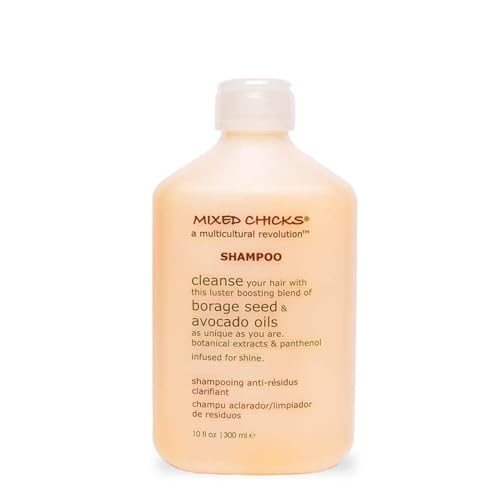
This product contains borage seeds and avocado oils, which are perfect for infusing moisture into the hair. It promises a rich lather that helps to gently lift dirt from the scalp. It also claims to work on all hair textures. For 10 USD per 300 mL bottle, this is such a steal.
Carol’s Daughter Lisa’s Hair Elixir Shampoo
This clarifying shampoo contains a blend of eucalyptus, sage, and lemon oils and coconut-derived surfactants to naturally cleanse the scalp and maintain moisture. It is free from sulfates, parabens, petroleum, and artificial colors. The downside, however, is that it is more expensive than the first two products at 12 USD for a 250 mL bottle.
You might be wondering, “How often should low porosity hair be washed?” You may wash low porosity hair with regular shampoo every other day. This way, you avoid product buildup but at the same time allow natural oils to seep into your hair cuticles.
It is important to note that clarifying shampoos are not meant for daily use. Ideally, you should