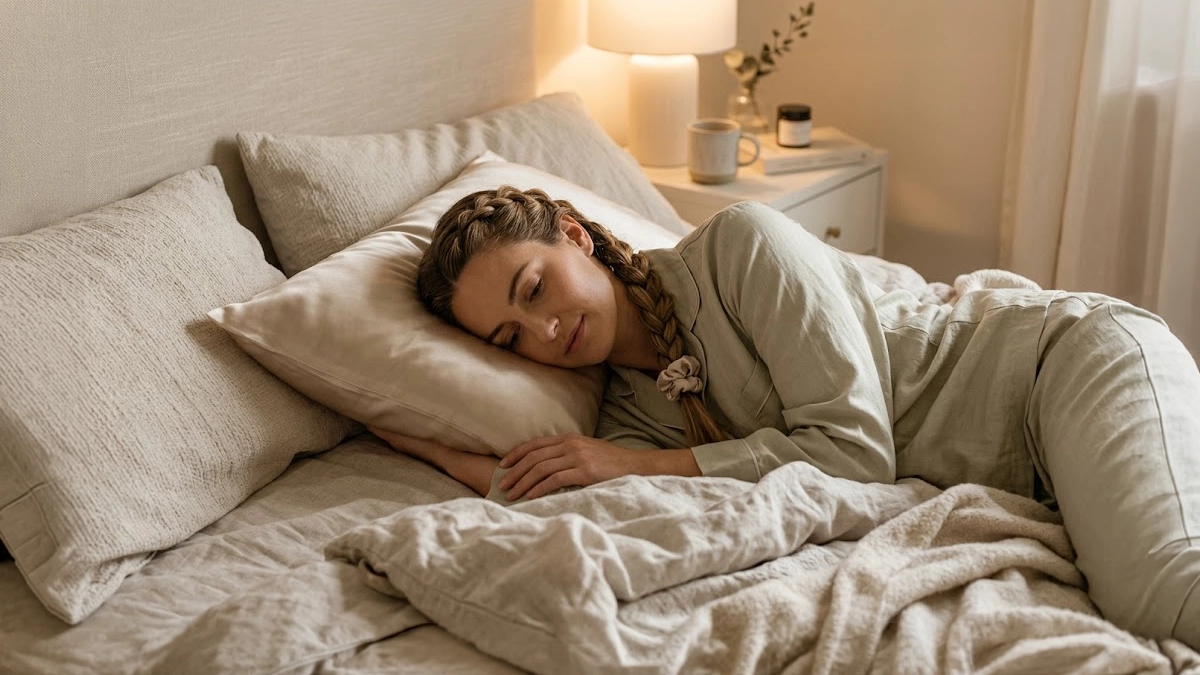
Don’t have time to blow-dry before bed? You can sleep on damp hair without wrecking it, as long as it isn’t soaking wet and you pick a loose, protective style.
Here are easy hairstyles to sleep in with wet hair, plus a quick pre-bed routine and how to refresh your hair in the morning.
This post may contain affiliate links. If you click through and make a purchase, I’ll earn a commission, at no additional cost to you. Read my full disclosure here.
Why Wet Hair Needs Extra Care
Wet hair stretches more easily and is more fragile than dry hair. Tossing and turning on a rough cotton pillowcase adds friction, which can lead to frizz, tangles and breakage.
A scalp that stays damp all night can also be more prone to irritation and dandruff, so it’s best to let your roots dry as much as possible before bed.
The bottom line: don’t sleep on soaking-wet hair. Towel-dry it first, then choose a loose, low-tension style.
The Golden Pre-Bed Prep: 4 Easy Steps Before You Sleep
Do these four quick steps before bed:
1. Squeeze Out the Excess Moisture
Never jump straight into bed with dripping locks. Wrap your hair in a soft microfiber towel or an old cotton t-shirt for 10 to 15 minutes. Microfiber absorbs water rapidly without roughing up the delicate cuticle layer.
2. Fortify with a Leave-In Conditioner
Spritz a lightweight leave-in conditioner from your mid-lengths to your ends. It helps with tangles and reduces friction overnight.
3. Detangle Gently with a Wide-Tooth Comb
Skip fine-tooth combs and brushes on wet hair. Use a wide-tooth comb, starting at the ends and working up to the roots, so you don’t snap strands.
4. Seal Your Cuticles with a Light Hair Oil
Warm a drop or two of light hair oil (like argan or jojoba) between your palms and smooth it over your ends.
7 Easy Hairstyles to Sleep in with Wet Hair
The one rule: keep it loose. Tight styles pull on your hair and scalp, especially when your hair is wet.
Best Overnight Hairstyles at a Glance
| Hairstyle | Best For |
| The High Bun / Knot | Root Lift & Bouncy Waves |
| Classic French Braids | Defined, Symmetrical Waves |
| Dutch Braids | Deep Texture & Volume |
| Pineapple Updo | Preserving Wet Curly Hair |
| Twisted Rope Braid | Glossy Spiral Heatless Waves |
| Twin Space Buns | Short Hair & Medium Lengths |
| Low Ponytail Stack | Smooth Straight Hair Sleekness |
1. The High Bun (The Relaxed Top Knot)
The top knot—often called a top bun or loose high ponytail bun—is an effortless overnight classic for anyone with long hair craving morning volume.
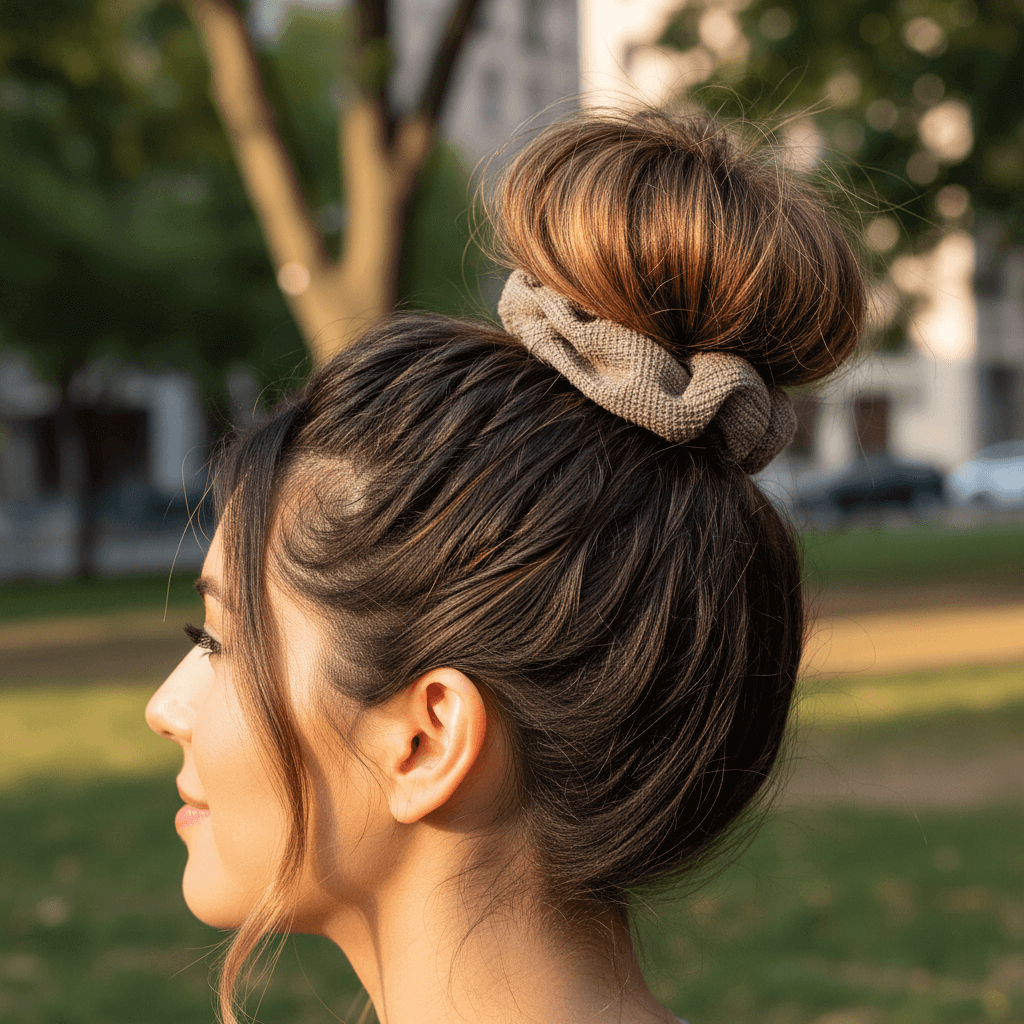
- Why it works: Gathering your locks directly at the top of your head keeps your hair safely away from the pillow, ensuring you never lay your head directly against your damp ends while sleeping.
- How to do it: Flip your head upside down and gather your strands loosely at the crown. Gently twist your hair around itself into a relaxed bun, and secure it with a soft silk scrunchie or satin scrunchie. Avoid standard elastic bands that crush damp cuticles. In the morning, shake it out for loose, voluminous body!
2. French Braids for Effortless Beachy Waves
French braids are an easy way to get waves overnight without a curling iron.
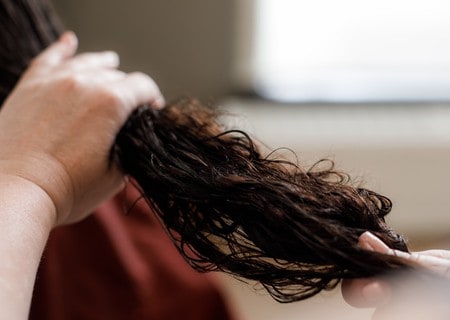
Why it works: Starting high near your scalp, a French braid gently weaves damp strands inward, setting uniform, crease-free beachy waves from crown to tip.
How to do it: Part your hair down the middle into two sections. French braid each side, adding small sections as you go down toward your nape. Tie the ends with a snag-free tie or mini scrunchie. Keep the braids loose; you’ll still get waves without pulling on your roots.
3. Dutch Braids for Voluminous Texture
While French braids cross hair over the middle, dutch braids cross sections underneath, creating a raised, 3D braid pattern that injects extra root lift and deeper S-wave definition.
- Why it works: Dutch braids are a great way to lift flat hair away from the scalp, making them a good option for fine or limp strands seeking dramatic texture.
- How to do it: Split your hair into two halves. Braid each side by crossing the outer strands under the middle strand. Tie the ends loosely. Because the braid sits on top, your hair dries with more lift at the roots.
4. The Pineapple-Style Updo (Best for Curls and Natural Hair)
The pineapple is a go-to overnight style for curly and coily hair.

- Why it works: Gathering your curls high on your head keeps you from crushing them against the pillow while you sleep.
- How to do it: Bend forward and scoop all your curls to the absolute peak of your crown. Slip a loose satin scrunchie once around the base without wrapping it a second time—it should feel like an ultra-loose high fountain of curls. In the morning, release the scrunchie, let your ringlets fall forward, and gently fluff your roots to reveal springy, beautiful curls.
READ: How To Style Wet Hair In A Hurry
5. The Twisted Rope Braid
If braiding isn’t your thing, a twisted rope braid is easier and gives soft, bouncy waves.

- Why it works: Unlike a 4-strand fishtail braid or standard three-strand weave, a rope braid uses two twisted sections that spiral around one another to deliver smooth, polished S-curves.
- How to do it: Gather your damp hair at the nape of your neck and split it into two halves. Twist each half clockwise, then wrap the two twists around each other counterclockwise. Twisting in opposite directions keeps the rope from unraveling. Secure with a silk tie.
6. Twin Space Buns (Loose Side Buns)
Do you toss and turn on your back all night? Twin loose buns pinned loosely on each side of your head offer a deeply comfortable sleeping solution.

- Why it works: By distributing your hair into two distinct zones positioned forward or low behind your ears, your head can lay completely flat on your pillow without resting on a bulky knot.
- How to do it: Part your hair in the middle. Take one side, twist the length gently, and wrap it into a relaxed bun, pinning it in place with coated bobby pins or securing it with a soft scrunchie. Repeat on the other side. This is also a great option for managing short hair that is too cropped to fit into a single topknot.
Check out: What to Do With Wet Hair After a Shower
7. The Low Ponytail Stack (Or Sock Bun Alternative)
If you want smooth, straight hair in the morning, a loose low ponytail with a few scrunchies down the length keeps it from bending.
- Why it works: It holds your hair straight, minimizes overnight bending, and prevents friction knots from forming at the nape of your neck.
- How to do it: Smooth your hair downward into a loose low tail at your neck. Secure the base with a satin scrunchie. Place a second and third scrunchie every two inches down the tail to keep the shaft elongated and straight. Alternatively, you can tuck your ends into a plush sock bun to create a subtle inward flip at your tips.
READ: How To Stop Hair Breakage Caused By Ponytails
Tailoring Overnight Styles to Different Hair Types
Not every hair structure dries at the same rate, and understanding how different hair types respond to damp styling makes all the difference:
- Fine and Straight Hair: Fine strands stretch easily and are prone to mechanical breakage. Never braid too tightly. Opt for a relaxed top knot or a loose 2-strand twist using a lightweight volumizing foam.
- Wavy Hair (Type 2): To enhance waves without frizz, apply a dime-sized dollop of curl cream to damp strands, braid loosely, and let the hair air set.
- Curly and coily hair (types 3 and 4): Curls lose moisture easily. Use a leave-in cream and put your curls in a pineapple under a satin bonnet or scarf.
- Short Hair Cut: If your hair length makes braiding impossible, do not force it into tiny elastic bands. Instead, wrap your hair with a silk band or simply clip the front fringe with soft, flat crease-free clips.
Must-Have Overnight Sleep Accessories
Your pillowcase matters too.
| ACCESSORY | WHY YOU NEED IT |
| Silk Pillowcase | Eliminates surface friction; retains hair moisture |
| Satin Pillowcases | Budget-friendly alternative to genuine silk |
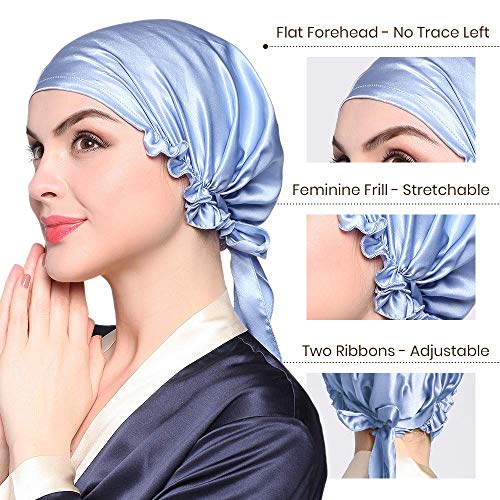
| Silk Headscarf / Wrap | Seals cuticle layers flat; prevents sleep-tangle frizz |
| Satin Scrunchies | Secure styles comfortably with zero tension or creases |
| Mattress Protector | Shields bed memory foam from damp-hair moisture seepage |
A silk or satin pillowcase is worth it. It creates less friction than cotton, so damp hair is less likely to frizz or tangle.
If you prefer keeping your hair completely contained, slip on a lightweight silk scarf, satin scarf, or a fitted silk headscarf before sleeping. Using a dedicated hair wrap acts as a gentle shield, locking in your leave-in treatments and keeping unruly flyaways tightly pinned.
The Morning Revival: How to Style and Refresh
In the morning, a couple of minutes is all you need:
- The Gentle Release: Carefully remove your silk hair ties or bobby pins. Do not rake a brush aggressively through the waves! Instead, tip your head upside down and shake your roots loose with your fingertips.
- Tame Any Lingering Dampness: If your roots still hold a tiny touch of moisture, hit them with a quick 30-second blast of cool air from your blow dryer to set the shape.
- Absorb Root Oils: Spray a burst of dry shampoo along your crown to absorb any overnight oil buildup and generate instant, airy root volume.
- Reactivate Texture: If you wake up with a touch of frizzy hair, emulsify two drops of lightweight hair oil or curl cream in your palms and lightly scrunch your mid-lengths upward to redefine your waves.
READ NEXT: What to do with long hair while sleeping, how to tie your hair at night and how to wrap your hair in a scarf for sleeping
Frequently Asked Questions (FAQs)
Is it really that bad to sleep with wet hair?
Sleeping on soaking-wet hair isn’t a good idea. Wet hair is more fragile, so pillow friction causes more breakage, and a scalp that stays damp all night may be more prone to irritation. Towel-dry until your hair is just damp (about 70–80% dry) before you sleep.
What is the best way to tie hair while sleeping at night?
The safest, best way is to gather your locks into a loose topknot or high pineapple using a genuine silk or satin scrunchie. Avoid tight elastic rubber bands, which cause crushing, severe creases, and tension thinning along your hairline.
Will overnight braiding cause hair loss?
Only if the braids are pulled too tight against your scalp. Tight hairstyles pull aggressively on the follicles, triggering traction alopecia over time. Keep your Dutch or French braids relaxed, soft, and flexible so your scalp stays comfortable throughout the night.
What if I don’t have enough time to dry my hair before bed?
If you have zero energy for a full blow-dry, micro-plop your hair with a microfiber towel for 10 minutes to draw out the bulk of the water. Apply your leave-in conditioner, wrap your damp strands into a loose silk headscarf, and sleep on a satin pillowcase to minimize friction while it air dries.
Can I do overnight hairstyles if I prefer a morning shower?
Absolutely. You can sleep in a protective silk wrap to preserve your dry hair overnight, take your morning shower with a shower cap on, and unwrap your bouncy, frizz-free locks in seconds.
Image Credits: Deposit Photos
PIN for Later!